
(3/3) Tackling the future: post-scarcity elements
In this third and final article in this series, I continue to break down each points from Vinod Khosla and unpack the unique challenges…

In this third and final article in this series, I continue to break down each points from Vinod Khosla and unpack the unique challenges attaining such “possible future”, if you want to reread his points or just opened this article, here is his presentation:
I am not going to fully reiterate his points here, just focusing on the title and my reaction, let’s dive in for this round:
9. “Resources will be plentiful”
This prediction I mostly agree with, though not the reason the description would suggest. Resources are already plentiful enought that we could achieve actual post-scarcity society. However just one part of the challenge is to discover the resources, much more important is to retrieve them, economically and without destroying our habitations! (And taming consumerism, but that would be another large topic to address.)
Two outstanding paths to gather more resources we could ever dreamt of so far:
- Mining Earth’s crust: such a deep mining would yield unfathomable amount of raw resources, the challenge though is immense, both on material science and engineering solutions. One deep mining was attempted only so far and that was not even aiming to bring up economically viable resources, and that only got to third of the crust, though new projects are underway, this is a limited option still with unknown possible negative effects if done widespread;
https://en.m.wikipedia.org/wiki/Kola_Superdeep_Borehole

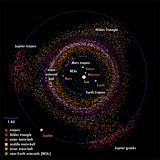
- Asteroid mining: while at least safe for Earth itself, the vast amount of materials available throughout the Solar system are spread out in a dangerous and challenging environment. Here I would expect robotics to shine and as lately successful missions proved that mining in space is possible, scaling it to economically viable operations is still a long way from today. While I believe this way will be the dominating one in the century, the current challenges limited the proof of concepts to 7 grams (!!!) of asteroid material successfully returning to Earth for the cost of over a billion dollars.
What can be done now: continue research on multiple fronts, we need to diversify our chances, combine multiple disciplines to achieve success and scalability, however oversight of the research and subsidizing it toward clear KPIs that benefit us all, including safety of workplace and avoiding adverse environmental effects are key to have positive impact.
Overall space research is a net benefit to humanity in my belief, as our understanding of how the world and the universe works leads to beneficial discoveries that improve all segments of life, even if the connection is not clear to most.
10. “We will have new food and fertilizers”
This is the only point I perfectly agree with, the most attainable in the near future as we have all possible technologies in place and improvements are necessary only to actually unlock their impact.
In human history, the main turning points were always the moments when a new technology allowed at least a 10-fold increase in food production per worker, from hunter-gatherer to farmer, then tools introduced, later steam engines, to today’s industrialized farming, the next revolution feels near, though it has to achieve again a 10-fold increase at least in food productivity with same or less inputs. Some possible ways we can achieve this:
- hydroponics, aquaponics, other soil-less methods: new ways to create closed ecosystems and ramp up fruit and vegetable production, if later combined with fusion energy, we can achieve automated, around the clock continuously producing plantations irrelevant of location and weather (and the only way to inhabit space too);
- new food processing techniques to allow otherwise undesirable food for the masses to rework into desirable formats and tastes, e.g. insects have better output-to-input ratios (protein mass created for a unit of intake) than cows and their protein reworked into burgers would yield much higher amount of sustainable food, “meat products” made from vegetables are getting better in taste though still need a large amount of spices that makes the end result feel off.
About the taste, it will always be on the personal preferences, some will prefer the new ways, some the original, I believe all have their place in our future, though regulation needs to balance between accessibility and environmental effects.
11. “From the practice to the science of medicine”
Undeniably great breakthroughs were achieved in recent past, some with help from huge crowds to assist at data classification, e.g. the project done through one of the MMO games, Eve Online, players helped with cell photo categorizations.
AI technologies of today depend on these data collection methods, the data quality and its reliability play huge role at their successful predictions. These advancements will continue and fueled more as technology matures.
However a great challenge remains in this field, in my opinion, accessibility. As AI model training is expensive, precision care, personalization of drugs and treatments will undeniably be prohibitively expensive at the beginning or the patient becomes the product and everyones data will be mined to create treatments then limited to a select few who can pay for it.
Besides as data is the cornerstone of a successful AI algorithm, medical data is the most sensitive to tainted sources. Today’s Internet, misinformation and attention grabbing is at the forefront, every day hundreds of diets and other drugs come out or advertised. Filtering all of these down to collect reliable and repeatable data will be an enormous task, especially not suited for any enterprise without crowdsourcing. Then keeping the quality of the data coming from the crowdsourcing campaigns are the next greater challenges.
What can be done now: government investment into healthcare is essential to keep up and to develop current capabilities, quality of care and number of beds available, and the logistics of regions. While stably rolling out current technologies, keeping doctors and nurses interested in their profession by improved work-place conditions and competitive wages, focus on accessible aggregated research databases will be essential to build the foundation for our healthcare future.
12. “Carbon will have solutions if we have time”
Carbon has to have solutions, especially as we don’t have time left anymore. The long-time ringing bell that was evident even at Carl Sagan’s time was ignored for too long and now we collectively witness a slow moving catastrophe where the consequences are harder and harder to dismiss as the days pass.
But the solutions have to be systemic, widespread and enduring to actually make a difference. Which makes international cooperation essential for the cause, as we all suffer the repercussions, we all have to take part of the work.
One thing always brings hope to me, the fact that we have done it before. Two global catastrophes were limited and eventually averted (though there are still remnants to be monitored and cleaned up), one was the lead put into car’s fuel, getting into everyones blood and causing lead poisoning, which leads to brain damage, cognitive degradation and not reversible:
The second was the loss of ozone layer due to man-made materials used in refrigerants and aerosol propellants depleting Earth’s natural protection against ultraviolet light especially UV-C component, which is harmful to all living things:

In both cases, it took a tremendous amount of work, regulations passed, alternatives emerging, still we managed to tackle these issues.
I sincerely hope we all can do it again and solve greenhouse emissions too.
“A few entrepreneurs, aided by policy to prevent short termism, can make this future happen.”
We actually need a much stronger call to action than this:
“A lot of entrepreneurs, individuals and enterprises, aided by targeted subsidies and anti-short-termism regulations, will make the future better.”
While a large amount of wealth concentrates at a small group, the backbone of our world are the small-medium enterprises and the individuals. Our consumption patterns, induced demands and supplies drive a large part how our present functions.
And the disclaimers
The “… things that might slow down predictions” list of cave-ats are just too broad and undermine Mr. Khosla’s own points.
Resistance was always there and will be there as change is always scary for everyone.
Financial market conditions, incumbents and politicians can kill a good idea, that is why experts, entrepreneurs, civil organizations and politicians need to work together as many of our problems will be solved by ideas that are initially not a good financial decision.
Entrepreneurs will show up, if as above suggested in many points, we make it lucrative to work on these by subsidizing, not punishing honest tries but deterring scams and frauds at the same time.
The few bad AI-related outcomes are a learning opportunities, being sensationalized or not, we all have to pay attention on how to approach the new tech’s opportunities and pitfalls. Enterprises need to learn from these bad outcomes to avoid and handle responsibly.
These are all obstacles natural to any progress in new fields or researches, and exactly the ones you can solve by the help of experts. The key is to align incentives toward the shared goals.
“Abundant, awesome, technology-based, “possible tomorrows” are likely if we allow them to happen.
As the ever optimist that we can achieve post-scarcity society, it is not enabled by technology alone. It requires a concert of grass-root initiatives, political will, setting aside petty differences, mass adoptions, and so much more.
And I have a specific problem with the word “allow”, it is passive, it implies that everyone can lean back on their couch safely and an unknown small circle of “we” will take care of your biggest problems.
I believe we all most work for a better future to realize it and we have to take our part in it to the best of our abilities. Some will organize, some will regulate, some will research and some will build, some will train the next generations, some will take care of those in need and they are all contributing to a better future.
One by one, step by step and day by day.
Disrupting industries are a great way to achieve progress, however it is far from being the only way to be effective. Small actions on a large scale add up to a lot, changing political wills, aligning interests are all part of progress.
Conclusion
All these topics one by one are extremely complex areas, to be able to think of them critically requires more details, knowledge and a structured approach to their aspects. My takes above are a quick reaction in less than a day of looking on them and recalling previously consumed content in such topics.
If you take away one point from me, please make it this: experts, entrepreneurs and all in between, we are all in this together, we need each all of us to debate, think, share and develop toward a better future.
Don’t just listen to sensations, inflammatory comments and expressions or believe in a cult of one to solve all your problems. Read the sources yourself and get your conclusions, change your mind if evidence is provided. I am going to be open too.
Responding to this topic, I realized how much each of these topics worth, so I try to deep dive to each of them separately with more arguments and potential solutions we can work toward.
Thank you sincerely
Thanks to Vinod Khosla giving these points, inspired to think forward and I am sure this was his main purpose, to spark curiosity combined with hope for a better future.
Thanks for Ethan Evans to spreading it to his audience as it would not be on my radar otherwise.
And thank you my dear reader for your time and attention! If you enjoyed, leave me a clap or two! If you have any thoughts to share, challenges or comments, please write on the article, looking forward to read your thoughts!