
36. Ignition point
“Towing fleet, fire it up.”
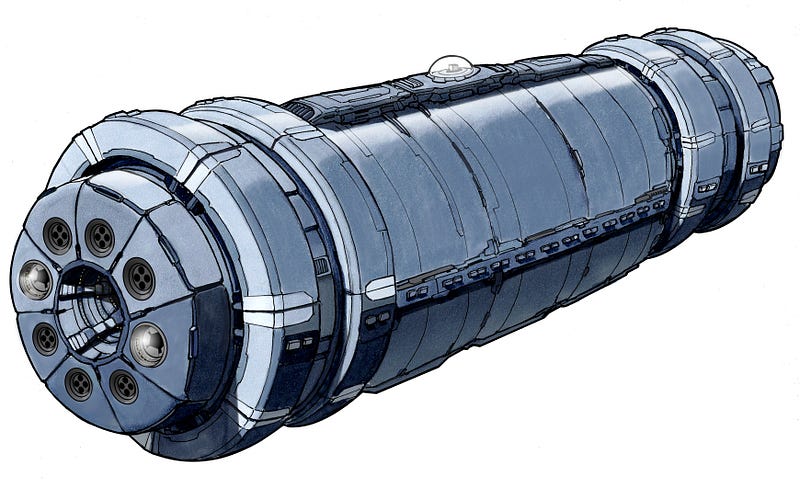
- “Towing fleet, fire it up.”
The slow burning of the ion drives started up again and quickly rose above twenty percent mark. Then forty percent. Vince knew from the calculations, until the fleet is at least on ninety percent output on average, the Giant won’t budge, just slow down its falling.
Then they have to keep up the push for hours to achieve meaningful change in trajectory. Using the ion drives of the Giant, if they work, will lower this threshold to mere minutes.
As there was only one chance to fire up those engines, Vince first wanted to hit the ninety percent mark, believing it is easier to maintain that, and then having a no ion engine firing, than the other way around.
At least it would not be a blow to the fleet morale. He never forgot that everyone there was a volunteer. Some wanted to fire the ion drives so the fleet knew what they were facing instead of blindly hoping for the best.
After all the debate was decided when an engineer ran the numbers. The fleet needs to already keep the towing cables straight and they could not guarantee this if the Giant’s drives were working.
- “Fleet average above sixty percent and rising.” — regular call outs were radioed from the Steiger’s bridge.
They communicated for humans beyond the computerized commands continuously streamed to the fleet of small crafts and their own drones.
- “Seventy percent. All ships are stable, safety margins are clear. Keep going.”
The excruciatingly long minutes to wait as none of the captains or pilots could do anything actively. Their experience and skills were relegated to second tier, only overseeing the navigation computers’ work. Tiny adjustments on thrusters were done by blazing fast computers. Fleet wide corrections calculated and executed by the Steiger’s main cores.
- “Eighty percent. The Giant’s acceleration almost at zero.”
The goal is so close. Vince was thinking of the thousands, tens of thousands still surviving day to day on that ship next to him. As the rotational gravity was still on, they were spinning around and the Giant was on his right side, if he thought the gravity is down.
- “Ninety percent. Stand by for Giant’s ion drive ignition. All four engines are a go.”
- “Ignite.” — confirmed Vince and committed the fleet for the last phase of the operation.
- “Ignite started. Thrust rising, fleet still stable.” — applause broke out in the comm center of the Steiger cheering on the fleet.
- “Confirmed, slow acceleration detected by on-board measurements too. Great job everyone!” — Vince felt relief as the plan seemingly worked without a hitch.
Until the proximity warning kicked off again.
- “Bendeghuse, boogies emerging.” — opened private channel to align on next steps.
No answer again. This time Perseus Train had no more computing power left to track one more ship, it was fully occupied keeping the safety margins with their neighbors.
- “Steiger, do you see? I can’t reach Bendeghuse again.”
- “Yes, we see. All four contacts emerging through the docks. Bendeghuse is not moving. Stand corrected. Bendeghuse reorients.”
One of the ships passed so close to Vince’s bow section, he could see the shapes of shaded windows. He could see the cargo ship, the type and usage in the passing ship. The docking clamps, small amount of strategically positioned windows, even though he couldn’t say the manufacturer or designer of the class.
In a minute the formation passed the line of towing ships. The federal cutter reacted slowly to approach them. Slow enough to miss the departing cargo ship and its escort, unable to position in front of them.
Instead it floated behind them, between the pirate ships and the civilian fleet. Only the Bendeghuse was close enough and equipped with high quality visual sensors to see the small openings on the side of the escorts.
Except the Steiger, whose sensors were fine-tuned to detect cracks in distant asteroids allowing safe mining operations. And he had to deal with the occasional pirate raids himself.
- “Move half of our drones in front of the civilian fleet. Now!”
His crew gave the immediate command and the drones disconnected their tow cables accelerating fast forward on maximum thrust.
The alarms didn’t go off until small metal objects emerged from those openings. The small rods flipped around quickly and fired their engines. These were missiles and Bendeghuse was too close to react with their point defense. In the cacophony of alarms and warnings, the inexperienced crew who are used to patrol peaceful regions reacted slowly.
They could only take out a handful of incoming projectiles as the volley teared through their hull, killing the pilot and captain among the first. Then hit their computer and engine cores rendering it a derelict metal coffin.
The cutter was too small to carry an effective armor, shield, and never stood a chance. A few missiles didn’t detonate at first and passed through their hull, taking out a few smaller towing ships. One event hit a tourists dome on the Giant, throwing thousands of refugees into space.
The drones were taking up position in front of the civilians, some were used as makeshift point defense, pushing debris away. Their numbers quickly faded, afraid that it will contribute to the carnage, Steiger pulled the drones away from the fleet.
As the Bendeghuse was consumed by a fireball, the hull disintegrated into panels and shrapnels. The Perseus Train’s stern section was the closest and the first casualty. Greg had no time to react, all was happening in seconds.
The shrapnels destroyed the bridge of the section almost immediately. Still connected to the towing cable, it started a chain of destruction in the fleet many could not escape from. Shortly flailing around the hull on the towing cable before another fireball consumed the Perseus Train itself.
Read the story leading up to now: